Say it in One Sentence: Log-Line Comparisons
Tracing how GenAI transforms film summaries
In this short sequence of two linked prompts, I recreated the loglines (a one or two sentence summary of the film) for the 17 films I started with. The first step was asking both models (Dall-E and GPT-5) to create an image inspired by the film titles in the dataset ("Create an image inspired by the lesbian film [title].") I then requested a logline for a film based on the image. This process yielded three distinct, small logline corpora: the original films' loglines, extracted from IMDb; loglines based on Dall-E images; and loglines based on GPT-5's images.
By analyzing these small corpora, the particular pattern of adjustment in the loglines can be traced.
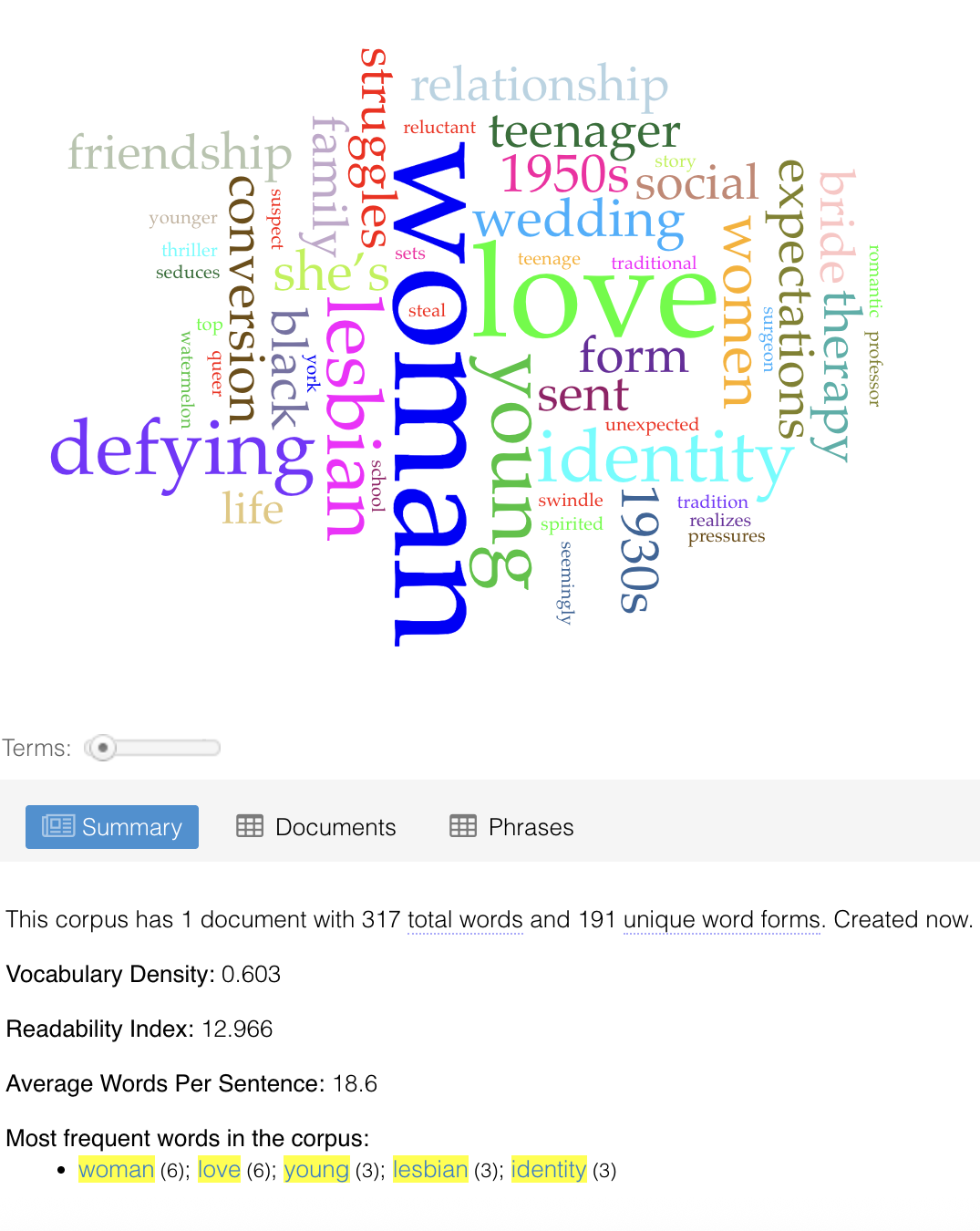
This image shows the word cloud and statistics based on the original loglines.
Dall-E's Loglines
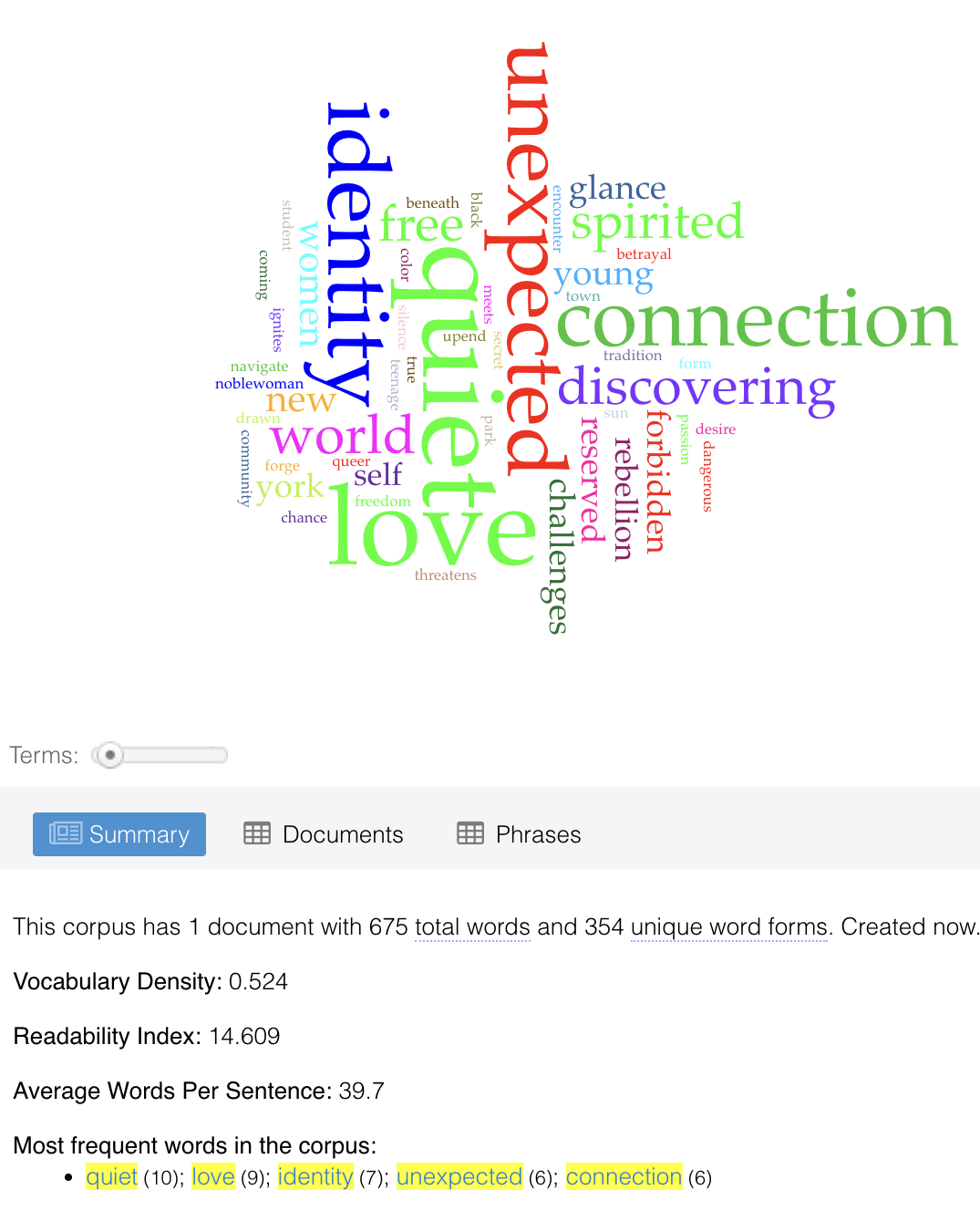
This image shows a word cloud and statistics based on Dall-E's corpus of loglines.
Looking at the statistical information, it's noteworthy that simplicity and accessibility declined. Dall-E more than doubled the word count (further evidence of GenAI's loquaciousness) and increased the readability index, making the texts more difficult to understand.
Some of the keywords shifted. "Lesbian" fell out of the top 5, but words that carry more associations to traditional rom-coms, like "unexpected," "connection," and, to some extent, "quiet," come to the fore.
Structurally, a fundamental adjustment is observable: The original loglines most often lead with character (e.g., "A young Black lesbian filmmaker sets out to…" or "A high school cheerleader is sent to…"), whereas the GenAI-generated loglines lead with the place/setting.
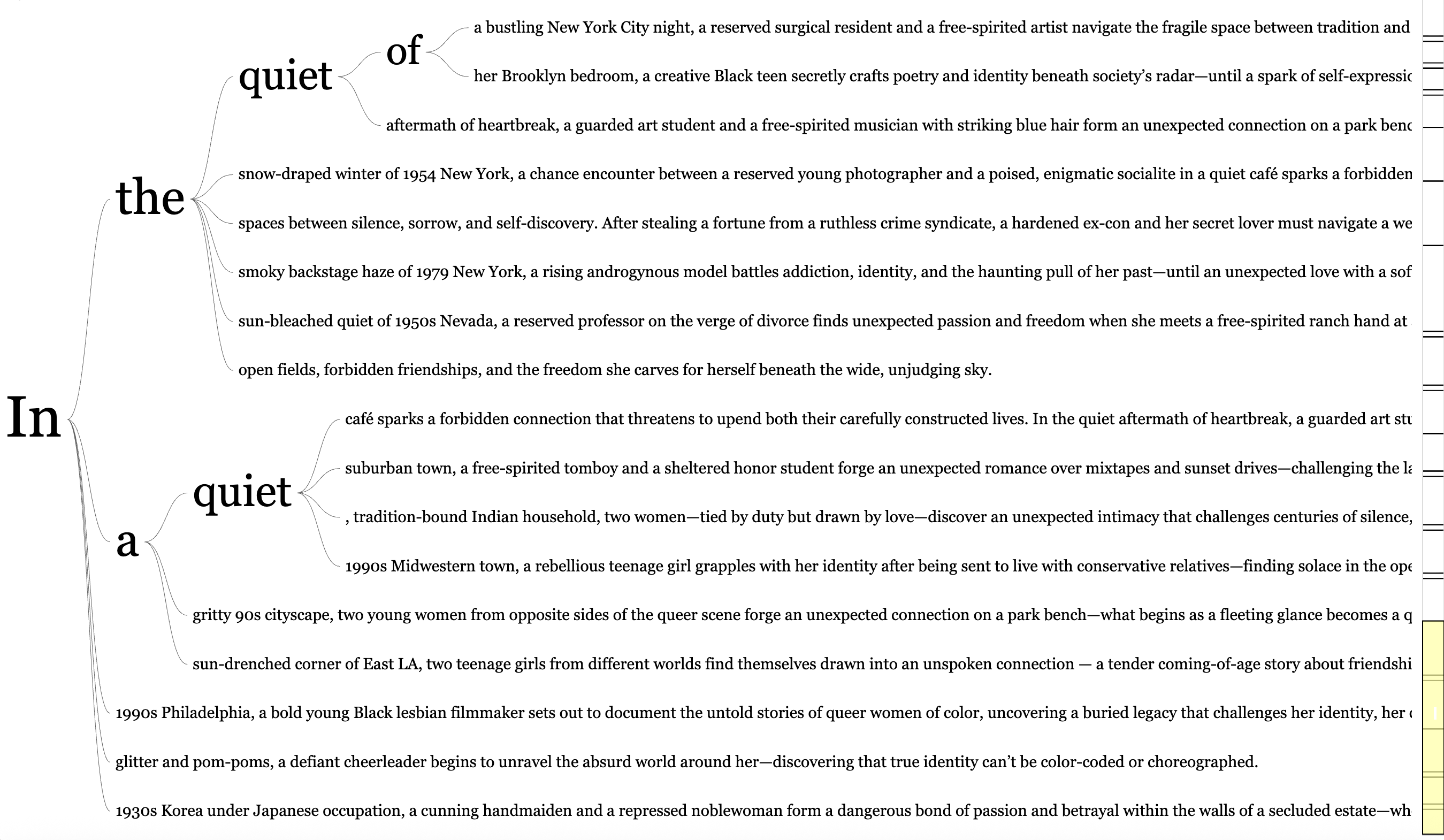
This image shows a word tree of the Dall-E-based logline corpus, highlighting the logline structure that begins with a description of — an often "quiet" — place. ("Quiet," perhaps to counteract the emotional turbulence to come?)
This shift of focus away from character parallels findings in the prompt-revision comparison (see More Sentences, Please), which details a shift away from relying on actors/people, specifically their facial expressions, to convey the emotional core and nuance of the films. Dall-E tends to outsource the creation of tone and atmosphere to the surrounding environment and landscape.
GPT-5's Loglines
Adding another corpus of loglines generated by GPT-5 to the corpora discussed above shows how the models' priorities changed over time/between models.
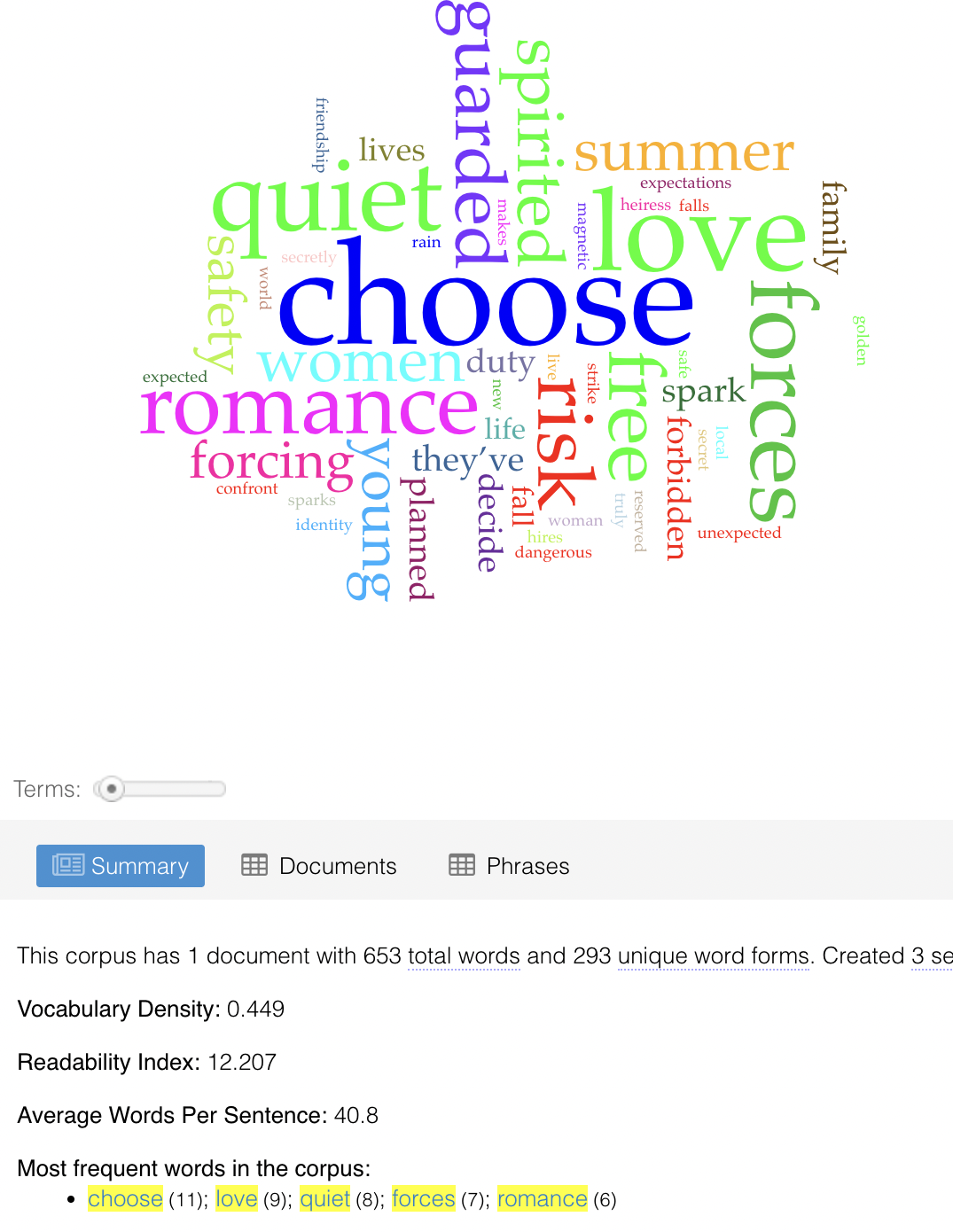
The image shows the corpus of loglines generated by GPT-5.
The total word count remains more than twice that of the original corpus, and word repetition rises. This corpus has fewer unique words than the Dall-E-based corpus. "Identity" falls off the most frequent words list, and the introduction of "choose" as a central term is particularly interesting. It seems that the model's genre-concept of the logline has solidified around foregrounding conflict and its set-up. To achieve this, the model frequently resorts to a sentence structure that begins with "When…", introducing the conditions for an ensuing plot/conflict. This focus on conflict, inherent in situations that involve a difficult choice, then justifies the new prevalence of "choose."
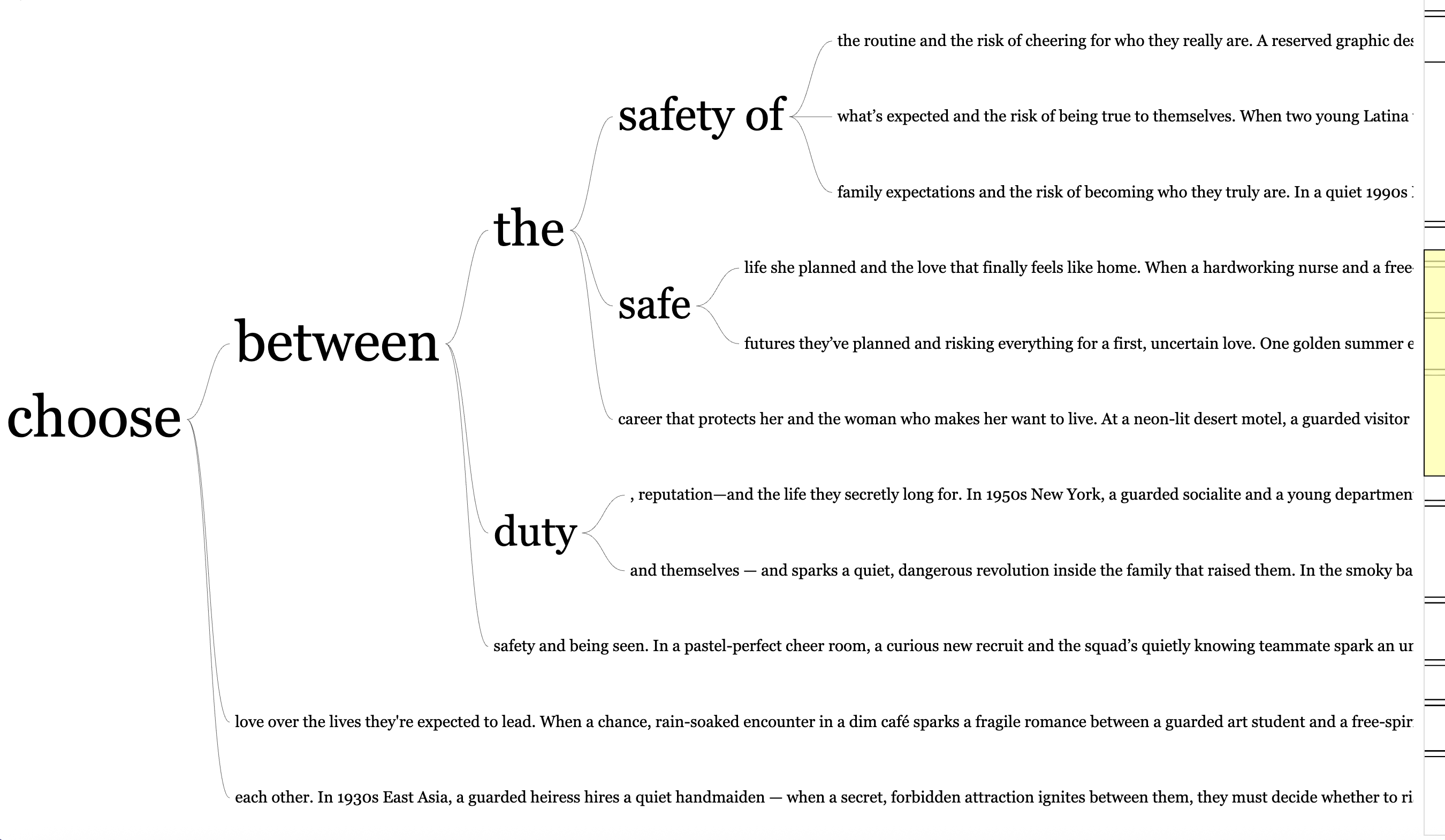
This image of GPT-5's logline corpus shows the prevalence of "choose" which serves to frame each around the protagonists' choice between challenging or not challenging (not explicitly named) norms.
The generalization of a binary choice involving either "safety" and various iterations of being true to oneself is curious to note. The ambiguous framing flattens the truth of Lesbian stories. Although it isn't wrong that safety and being true to oneself are often in conflict, it is also the broadest possible descriptor and applies to a range of experiences that deviate from normative expectations. Might we not say the same thing about a young vegan from a hunting family?
Conclusion
Overall, tracing the transformations of loglines shows that, when filtered through algorithms, the films' core message shifts from centering specific characters' discovery and expression of Lesbian identity to a generalized experience of conflict that demands a choice between safety and authentic self.